
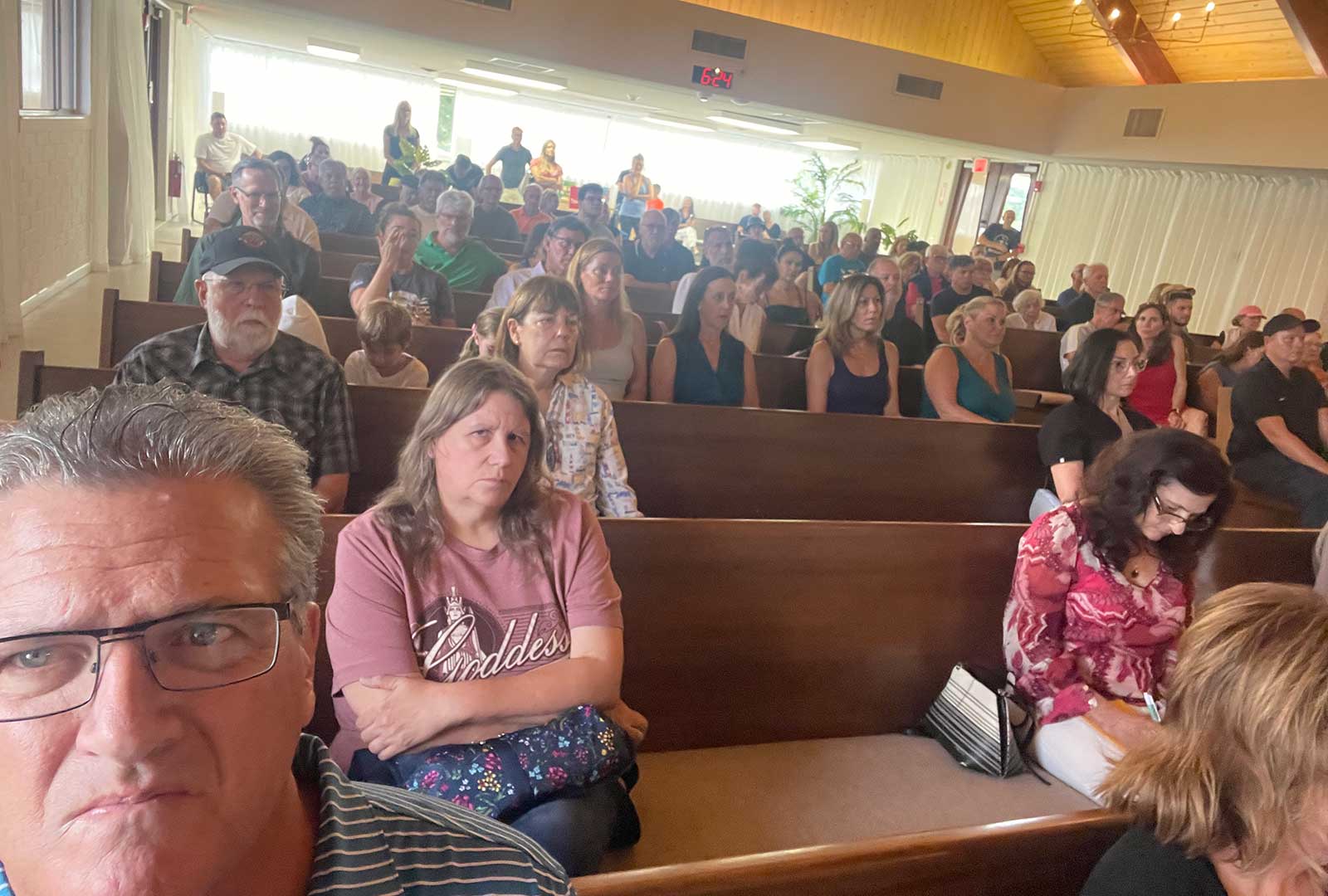
Across American cities and suburbs, a familiar scene plays out at city council meetings and planning hearings. Well-dressed residents rise to speak passionately against proposed housing developments in their neighborhoods. They cite traffic concerns, environmental impact, and preserving “community character.” Yet beneath these seemingly reasonable objections lies a more complex web of motivations that deserves closer examination.
Research reveals a troubling pattern: individuals who are older, male, longtime residents, voters in local elections, and homeowners are significantly more likely to participate in local government, and these individuals overwhelmingly (and to a much greater degree than the general public) oppose new housing construction. This demographic skew in local political participation fundamentally shapes housing policy outcomes.
The Contradiction at the Heart of NIMBY Housing Opposition
Many housing opponents express genuine concern about housing shortages and regional growth pressures in their communities. They vote for politicians who promise smart growth and sustainable development. Yet when concrete solutions appear in their own neighborhoods—whether upper-income townhomes, condominium complexes, or even modest density increases—the same people often become the fiercest opponents.
This contradiction raises uncomfortable questions about whether stated concerns about traffic and character truly drive opposition, or whether they serve as socially acceptable covers for less palatable motivations.
Unpacking the “Community Character” Argument
The phrase “community character” appears in virtually every housing development debate, but what does it actually mean? Critics argue this language often serves as coded opposition to demographic change. When residents worry that new housing will alter their neighborhood’s character, are they concerned about architectural aesthetics, or about the income levels, ages, or backgrounds of potential new residents?
The character argument becomes particularly questionable when applied to developments that would clearly enhance neighborhood quality. If a proposed townhome development or luxury condominium project matches or exceeds the design standards of surrounding homes, what character is really being threatened? When upper-income retirees and middle-aged families seek to move into well-designed housing that fits neighborhood aesthetics, the “character” objection often reveals itself as resistance to any change rather than concern about incompatible development.
The Traffic Smokescreen: Numbers Don’t Support the Hysteria
Traffic concerns dominate NIMBY rhetoric, but the evidence reveals a massive disconnect between stated fears and actual impacts. Professional traffic engineers use standardized trip generation rates that expose the exaggeration in most opposition claims.
The Reality of Housing Traffic Generation: According to Institute of Transportation Engineers (ITE) data, the actual traffic impacts of housing development are modest:
- Single-family homes generate approximately 10 trips per day and 1 trip per peak hour
- Apartments and condos generate only 7 trips per day and 0.7 trips per peak hour
- A typical 20-unit apartment building produces roughly 140 trips per day—spread across 24 hours
To put this in perspective, a small retail development generates 38 trips per day per 1,000 square feet, meaning a modest 5,000-square-foot strip mall creates more traffic than a 20-unit apartment complex. Yet the same residents who oppose housing due to traffic impacts rarely protest new shopping centers or office buildings that generate far more vehicle trips.
Traffic Impact Analysis as a Barrier: UCLA research demonstrates that Traffic Impact Analyses (TIAs) have become weaponized against housing development. These studies, required for most developments, systematically bias against higher-density urban housing where traffic alternatives are plentiful. The focus on Level of Service (LOS) metrics encourages sprawl by making urban infill development appear more problematic than it actually is.
The California legislature recognized this problem and passed SB 743 in 2013, mandating a shift away from LOS-based analysis precisely because it discouraged the types of dense, transit-accessible development needed to address housing shortages. Studies show TIAs have worsened housing affordability by raising development costs and pushing new construction to car-dependent suburban locations.
Environmental Arguments: Selective and Inconsistent Application
NIMBYs frequently invoke environmental protection when opposing housing, yet the application of these concerns reveals troubling inconsistencies and selective reasoning.
The Carbon Contradiction: Dense housing near transit and employment centers represents one of the most environmentally beneficial forms of development. Residents of compact, walkable neighborhoods generate significantly lower per-capita carbon emissions than suburban dwellers. Yet environmental arguments are systematically deployed to oppose such developments rather than support them.
The alternative—forcing development to far-flung suburban and exurban locations—creates far greater environmental harm through increased driving, infrastructure needs, and conversion of undeveloped land. Research from the University of California shows that housing unaffordability drives development patterns that increase wildfire risk and habitat destruction as construction moves to cheaper, more environmentally sensitive areas.
Selective Environmental Concern: Environmental objections to housing development display obvious selectivity. The same communities that cite tree removal or stormwater impacts from apartment buildings rarely apply similar scrutiny to:
- Shopping centers and strip malls (which create far more impervious surface per capita served)
- Office parks and industrial development
- Road widening and parking lot expansion
- Single-family suburban sprawl (which requires more infrastructure per resident)
A study of “environmental NIMBYism” found that environmental arguments often serve as socially acceptable cover for other motivations, particularly when the same environmental advocates don’t push for reduced consumption or car dependency in their own lifestyles.
The Scale Problem: Environmental opposition to individual housing projects ignores cumulative impacts. Blocking dense housing in environmentally appropriate locations doesn’t eliminate housing demand—it displaces it to less suitable areas. The net environmental effect is negative, as development gets pushed to greenfield sites requiring more infrastructure and generating more vehicle miles traveled.
The Property Value Myth: Research Contradicts Common Assumptions
Perhaps the most frequently cited concern about nearby housing development involves property values, yet comprehensive research reveals this fear is largely unfounded—and in many cases, backwards.
What the Data Actually Shows: Multiple peer-reviewed studies contradict NIMBY assumptions about property values:
- A comprehensive study of new apartment buildings across eleven cities found that new construction reduces nearby rents rather than increasing them, directly contradicting “induced demand” fears
- Research consistently shows that well-designed density can increase surrounding property values by improving walkability, supporting local businesses, and creating more vibrant neighborhoods
- Studies of townhome and condominium developments find neutral to positive property value impacts in surrounding areas
- Analysis of mid-rise and high-rise residential developments shows they often enhance neighborhood desirability and property values
Even market-rate housing research supports these findings. A comprehensive study by economists Asquith, Mast, and Reed analyzed 100 new apartment buildings across eleven cities, gathering rental data for apartments near new construction. Their research directly tested whether new buildings drive up nearby prices through “induced demand” or reduce them through increased supply. The results were clear: new construction reduces nearby rents, contradicting NIMBY fears about property values.
The Demographics Reality: When examining who actually moves into new housing developments, the data contradicts many NIMBY assumptions. New townhome and condominium developments typically attract:
- Empty-nest retirees seeking to downsize from larger homes
- Middle-aged professionals wanting modern amenities and walkable locations
- Small families preferring new construction with contemporary features
- Local residents upgrading from apartments to ownership
These demographics hardly represent the disruptive influence that NIMBY rhetoric suggests.
The Investment Logic Problem: The property value argument contains an inherent contradiction. If housing development reliably decreased surrounding property values, institutional investors and real estate professionals—who have every incentive to maximize returns—would avoid areas with new construction. Instead, investment flows toward growing, dynamic neighborhoods with ongoing development activity.
Moreover, the obsession with property value protection reveals an uncomfortable truth: homeowners are essentially advocating for artificial scarcity to inflate their asset values at the expense of those seeking housing.
Case Study: The Save Boca Phenomenon
The dynamics of NIMBY opposition are vividly illustrated in the current “Save Boca” movement in Boca Raton, Florida—a case study that reveals both the demographics and tactics of modern housing opposition.
The Movement’s Genesis: What started as Jon Pearlman’s reaction to finding out the city may relocate two parks and some rec facilities to make way for a new downtown government center with a hotel, housing and retail has turned into what he describes as a “grassroots movement.” The proposed 30-acre redevelopment near the Brightline station would include nearly 1,000 apartments, a hotel, offices, shops, restaurants, and a new city hall and community center.
The opposition quickly organized with all the hallmarks of a professional campaign: Save Boca lime green and bright navy T-shirts and yard signs — and volunteers going door-to-door to collect signatures on petitions that would force the city to let residents vote on the project.
The Demographics and Manipulation: The Save Boca movement exemplifies what political observers call the “AWFUL” phenomenon—Affluent White Female Urban Liberals who dominate local political discourse despite their narrow demographic slice. These are typically well-educated, financially secure women who have both the time and social connections to organize sustained political campaigns.
However, the movement’s leadership appears to exploit a broader demographic: aging baby boomers and empty-nesters who moved to Boca decades ago and now find themselves unable or unwilling to relocate. Many of these residents purchased homes when prices were lower and are now effectively trapped by their real estate wealth—they can’t afford to move anywhere comparable, yet they resist any changes to their community.
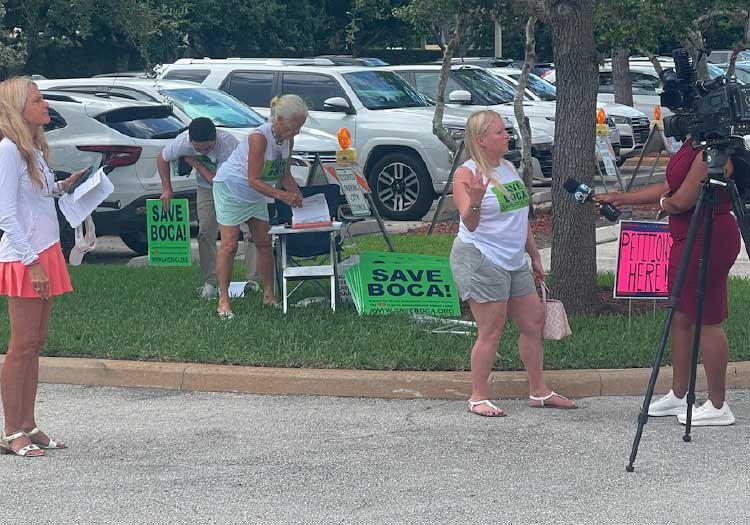
Boca Karens/AWFUL at Boca Raton City Council Meeting 7/17/25
The Political Opportunism: Pearlman, an east Boca resident for 12 years, he thought only a new city hall was in the works. Then he went to the charette the Terra & Frisbie Group had so residents could see a model and renderings of the first iteration of their site plan and “was shocked” at the scope. But rather than engaging constructively with city planning processes, the response was to attempt to seize control through ballot initiatives.
The movement appears driven by a handful of frustrated politicos who have found a receptive audience among homeowners fearful of any change. These leaders weaponize procedural tools and emotional appeals while avoiding substantive engagement with housing policy or regional needs.
The Contradiction Exposed: What makes the Save Boca case particularly revealing is that the opposition is to development that would serve exactly the demographic they claim to represent: affluent retirees and professionals seeking quality housing near transit and amenities. The project includes luxury apartments and upscale retail that would enhance rather than threaten neighborhood character.
Yet the mere prospect of adding nearly 1,000 high-end residential units—which would bring in substantial tax revenue and support local businesses—provokes organized resistance. This exposes the fundamental contradiction in NIMBY logic: it’s not really about the type or quality of development, but about preventing any change to the status quo.
The Democracy Problem: Who Gets to Participate?
NIMBY housing opposition reveals profound inequities in local democratic participation that systematically favor existing homeowners over those seeking housing—as the Save Boca movement illustrates perfectly.
The Participation Gap: Research consistently shows that local political participation is dominated by homeowners, creating a systematic bias in decision-making:
- Homeowners are typically 25% more likely to vote in local elections than renters
- In Seattle’s 2019 city council primary (with near-record turnout), homeowners comprised 62% of voters despite being only about half the population
- In Washington state’s 2010-2011 elections, homeowners averaged 85% of voters in suburban and rural areas
- Planning commission meetings are dominated by older, white, financially stable residents
This participation gap isn’t merely demographic—it’s structural. Homeowners have more time, resources, and incentives to engage in local politics. They’re more likely to attend evening planning meetings, hire lawyers, and sustain long opposition campaigns. Meanwhile, those who would benefit most from new housing—renters, young families, service workers—often lack similar political resources.
The San Francisco Case Study: A detailed analysis of San Francisco planning commission meetings between 2018-2019 revealed the extent of this democratic distortion. Despite the city’s severe housing crisis:
- Public participation was dominated by older, white homeowners concerned about property values and “neighborhood character”
- First-generation immigrants were dramatically underrepresented (13% of commenters vs. 35% of city population)
- Older commenters consistently opposed development while younger participants, particularly renters, supported new housing
- NIMBY voices significantly outnumbered pro-housing advocates despite citywide polling showing majority support for more housing
The Representation Problem: This creates a form of democracy that serves existing residents at the expense of future residents and broader community needs. As one researcher noted, “Planning meetings appear to be dominated by older, white, homeowners who are more concerned about their property values and other personal hindrances than about the common good.”
Even in communities with strong housing demand from retirees, families, and professionals, homeowner political dominance means that local housing policies often reflect the preferences of those who already live there rather than those seeking to join the community—regardless of the newcomers’ income levels or demographic characteristics.
Toward More Honest Conversations
Addressing the housing crisis requires confronting the data rather than relying on assumptions and fears. The evidence consistently shows that common NIMBY concerns—traffic chaos, property value destruction, environmental harm—are either exaggerated or simply wrong.
What the Research Reveals:
- Housing developments generate modest traffic impacts that are often overstated by factors of 10 or more
- Property values near new housing typically remain stable or increase slightly
- Dense housing development is environmentally superior to sprawl alternatives
- Well-designed townhome and condominium developments often enhance neighborhood character and property values
- The greatest environmental and social harm comes from blocking development in appropriate locations
The Exclusion Economy: When homeowners use political processes to restrict housing supply, they create an exclusion economy that transfers wealth from prospective homebuyers to existing property owners while limiting housing choices for retirees, families, and professionals seeking appropriate housing options. This system allows existing residents to capture the benefits of regional growth while externalizing the costs (housing scarcity, longer commutes, limited choices) onto those seeking to join the community.
Moving Beyond Surface Objections: Communities must move beyond reflexive opposition to examine the evidence. This means:
- Demanding that traffic and environmental concerns be applied consistently across all types of development
- Recognizing that property value protection shouldn’t override housing access for others
- Acknowledging that local control shouldn’t extend to excluding people from housing opportunities
- Understanding that the status quo is not neutral—it actively harms those seeking appropriate housing options in desirable communities
Perhaps most importantly, communities must grapple with whether the privilege of saying “not in my backyard” should continue when retirees, families, and professionals are unable to find suitable housing options in well-located communities. The data is clear: most NIMBY fears are unfounded. The question is whether we’re prepared to act on that evidence.
The Path Forward: Solving the housing crisis requires honest engagement with research rather than emotional reactions to change. Communities that base decisions on evidence rather than assumption will not only build more housing—they’ll build stronger, more inclusive, and more sustainable places for everyone.