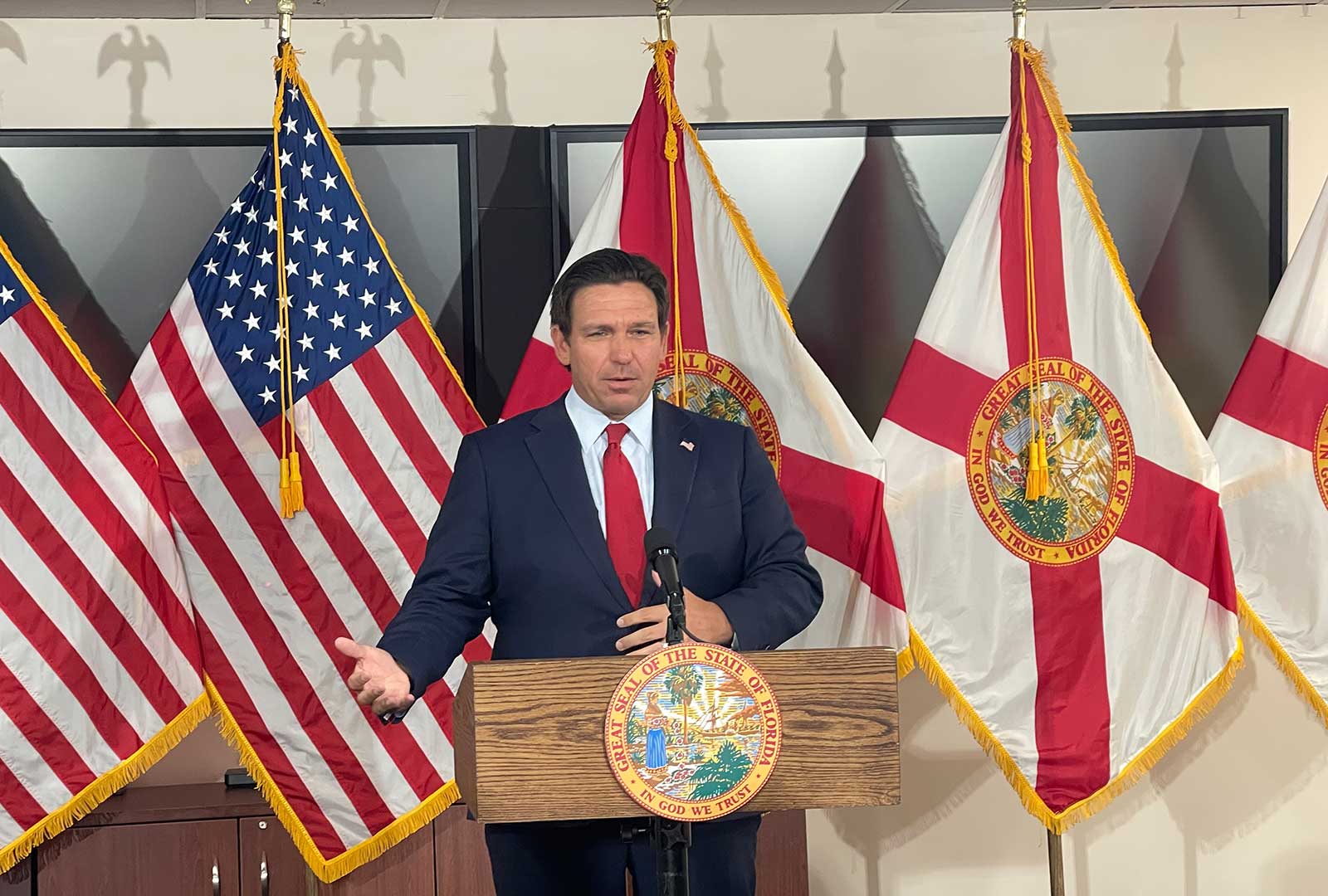
As is becoming all too common, Broward County finds itself under the microscope yet again—this time courtesy of Florida’s Department of Government Efficiency (FDOGE), spearheaded by the state’s Chief Financial Officer, Blaise Ingoglia. On July 22, 2025, Governor Ron DeSantis laid out his no-holds-barred plan to slash waste and turbocharge efficiency, drawing straight from Elon Musk’s federal DOGE playbook. By handing Ingoglia the reins to dissect local governments’ fiscal follies, DeSantis is charting a course to dismantle un-economic policies and squeeze every last drop of value from taxpayer dollars. No shock here: FDOGE kicks off with Broward County, that sprawling home to nearly two million souls, infamous for its reckless partisan spending and chronic mismanagement. So when the county floated plans to hand out take-home laptops to district students, it lit up alarms in Tallahassee like a taxpayer-funded bonfire.
An Effort Toward Efficiency
Don’t buy the spin—this isn’t some partisan hit job zeroing in on Broward. DeSantis made it crystal clear: FDOGE will eyeball 10 to 15 more city and county governments in the coming weeks. “We’ll be starting with those jurisdictions which have received a lot of complaints for their spending practices, and so we’re here in Broward County and I think most people know there’s some criticism of how the county government has operated,” the Governor told reporters on July 22. Shortly thereafter, state teams descend on Broward and beyond, unleashing onsite DOGE inspections and audits to gut wasteful spending. DeSantis also name-checked Miami-Dade as a prime candidate, with Palm Beach in the mix, and warned that no local outfit is off-limits.
This is the latest salvo in DeSantis’ long war on bloated budgets and for smart stewardship of taxpayer cash—a hallmark of his tenure predating DOGE. In his first term, he inherited a robust economy and supercharged it, ballooning the state budget from around $91 billion to over $110 billion while amassing a record $21.8 billion surplus, even as COVID ravaged the nation. That’s only possible when revenues lap spending, and DeSantis delivered. With the nation’s fewest government workers per capita, Florida still outshines bigger states in service delivery—proof that fiscal discipline and lean operations are baked into the Governor’s and State Assembly DNA. Calling this partisan? Laughable at best, downright subversive at worst. A $115 million contract in a cash-strapped county like Broward? That’s a red flag waving in the wind, especially given the shady path to get there.
Inconsistencies Create More Smoke
For two years, the Broward County School District has bungled its quest to snag a contract for take-home laptops—a saga drowning in delays and red tape, raising serious doubts about whether the school board is putting students first or just padding pockets. When the Lenovo deal expired in 2023, bidding kicked off, supposedly favoring the lowest price. HP snagged the initial win, with Lenovo as backup (despite student gripes about their clunkers). But on November 16, 2023, the district ditched all bids and rebooted. Fast-forward to April 24, 2024: local Figgers Communications Inc. emerged as the low bidder.
Owned by Fort Lauderdale businessman Freddie Figgers—a former State Ethics Commission appointee—the firm offered $150 per Celeron laptop and $190 for touch-screen models, materially more affordable than Lenovo’s $214 and $269, or HP’s $263 and $325. By the board’s own rules, this should’ve sealed it. Instead, they stalled the award twice before pushing to reject everything again.
This lit a fire under Figgers and some board members, culminating in a blistering 115-page bid protest against the district. Despite the award being recinded on July 1, 2024, the fallout lingered. At the July 23, 2024, board meeting, operations executive Jennifer Andreu pinned the blame on ex-employees, admitting “errors and missteps [were] made.” Her excuses? Nine post-bid addenda (way too many), baffling device specs, and murky forms on business diversity compliance. She urged ditching price-only bids for “experience and other factors.”
On the surface, this reeks of a slick maneuver to elbow out smaller players like Figgers—lowest bid be damned, since they lack the heft of HP or Lenovo. Three Board Members voted no on the rejection. Member Daniel Foganholi called it out: “pursuing a preferred vendor,” straight-up unethical. “It feels like if I wanted to put out a new vehicle for the district, and I wanted a Lamborghini and maybe Ford won out, I’m just going to say there’s something wrong with the item and I’m going to go back out until I get what I want. It almost feels like we’re trying to funnel a specific vendor…I think that’s bid rigging and bid tampering,” Foganholi said.
Yet, after a fresh RFP round (where Figgers Communications didn’t even bid), HP topped the “ranked” scores on December 3, 2024. The board geared up to vote May 13, 2025—until Superintendent Howard Hepburn yanked it that morning, citing an ongoing probe. Broward’s Inspector General launched an investigation May 28, 2025, to sniff out any foul play.
Enrollment Crisis Deepens the Fiscal Emergency
The scale of Broward’s enrollment collapse has reached alarming proportions, validating FDOGE’s concerns about fiscal mismanagement. According to the latest district data from August 2025, Broward schools now have more than 45,000 empty seats, including a staggering decline of around 10,000 students in the last year alone. This represents an unprecedented hemorrhaging of the student body that has plummeted to approximately 192,000 from historic highs over 250,000—a decade-long slide that shows no signs of abating.
The district’s response? Superintendent Howard Hepburn announced in late August 2025 that the school board is considering 34 schools for closure, repurposing, or consolidation as part of the second phase of their “Redefining Our Schools” initiative. This massive restructuring plan includes 16 elementary schools, 15 middle schools, and three high schools on the chopping block.
“To remain financially stable and strong for the future, we must right-size our district. That means some difficult decisions will be necessary, including school closures,” Hepburn admitted, tacitly acknowledging what FDOGE has been highlighting: the district’s bloated infrastructure can no longer be sustained.
The numbers are damning. The majority of schools on the closure list have enrollment figures below 70% of their capacities, with some schools operating at only 40% enrollment. Schools like Silver Lakes Elementary, Panther Run Elementary, and Palm Cove Elementary exemplify this crisis of utilization that makes big-ticket laptop contracts all the more wasteful.
Along Came DOGE
Any outfit bleeding more cash than it rakes in must slash spending or crater—doubly so when shaping tomorrow’s leaders. With Broward Schools hemorrhaging $505 per student and now facing an enrollment freefall that has created tens of thousands of empty seats, dropping big bucks on 50,000+ laptops is a recipe for red flags. The district’s own data shows they’re spending massive resources to maintain facilities and services for students who simply aren’t there—45,000 empty seats represent a staggering waste of taxpayer resources.
Board member Allan Zeman captured the reality: “What we’re trying to do is spend more money on the kids we have and less on the empty seats in an oversized footprint. It’s really just that simple.”
The enrollment crisis stems from multiple factors that FDOGE should investigate. Rising competition from charter and private schools, made more accessible through the expansion of school vouchers in Florida, combined with a lack of new families with young kids moving into Broward, has created a perfect storm of declining enrollment that makes the laptop contract even more questionable.
Hot on DeSantis’ July 22 announcement, Florida Attorney General James Uthmeier chimed in July 25:
“In light of Gov DeSantis’ and CFO Ingoglia’s DOGE efforts to identify waste, fraud, and abuse in local governments, our office has heard concerns regarding Broward County’s large contract awards, including at the Broward County School Board. We will support DOGE’s investigation and hold any bad actors accountable.”
The Broader Pattern of Mismanagement
The current closure discussions reveal a pattern of poor planning and fiscal irresponsibility that validates FDOGE’s scrutiny. When the closure initiative gained steam last year, the board initially requested a plan to close or consolidate at least five schools, with one board member even suggesting as many as 40 schools. This dramatic range suggests a district leadership that doesn’t have a clear grasp on its own operational needs.
The community resistance to closures—exemplified by the Lauderhill community’s strong opposition to the closure of Broward Estates Elementary earlier this year—demonstrates how years of mismanagement have created unnecessary pain for families while wasting taxpayer resources on maintaining underutilized facilities.
DeSantis’ DOGE zeros in on the rot: axing waste, dissecting mega-contracts, and uprooting ideological weeds like those shady DEI programs. The Governor’s pushing to “prune” nebulous, subversive nonsense, redirecting schools to forge job-ready citizens—not indoctrinated drones. “We want to make sure that these universities are really serving the classical mission…not to impose ideology,” he said, eyeing “meaningful employment after graduation.” This shreds the bogus partisan smears from critics—how is yanking government ideology from education anything but common sense?
The enrollment data provides concrete justification for FDOGE’s intervention. When a school district is operating with 45,000 empty seats while pursuing expensive technology contracts, it’s not just inefficient—it’s fiscally reckless. The fact that approved changes for Phase 2 could go into effect in the 2026-27 school year means Broward will continue bleeding taxpayer money for at least another academic year while maintaining this oversized footprint.
Despite the naysayers’ gloom, Florida DOGE is a game-changer, sparking real efficiency and good governance. The Broward enrollment crisis provides a textbook example of why state oversight is essential when local officials fail to manage taxpayer resources responsibly. It’s refreshing to see leaders walk the talk on fiscal sanity, not just spout it for votes. Florida’s in solid hands, drawing envy as the nation scrambles to copy the Sunshine State’s shine. Day by day, we’re ditching dead weight for true progress. Florida’s progressives peddle the same regressive policies voters rejected nationwide; in 2025 and beyond, real forward momentum flows from conservatives putting South Florida tax payers and residents first.